 Skip to content




Vata Pitta Kapha Diet Charts
Regular price $30.00Ayurveda Charts for Vata Pitta Kapha
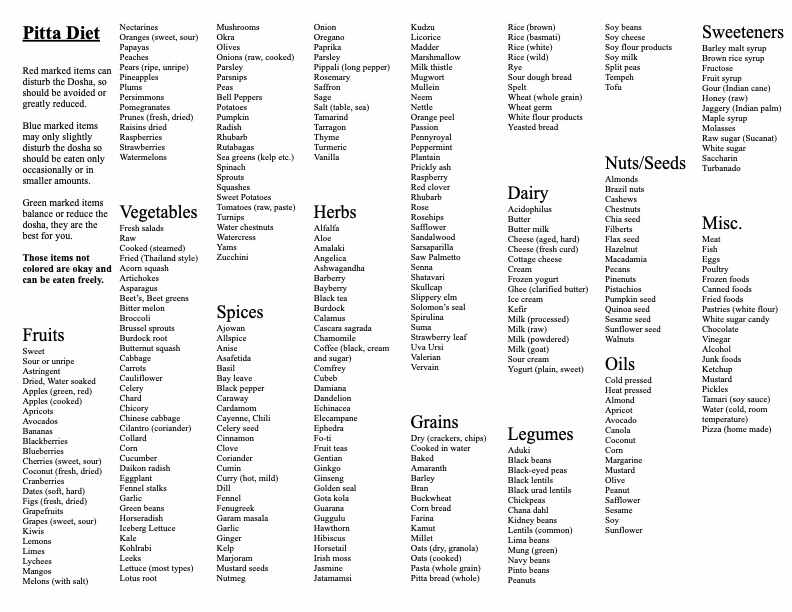
Get all three diets and you will be able to plan meals better for your family or follow a different diet during the changing of the seasons.
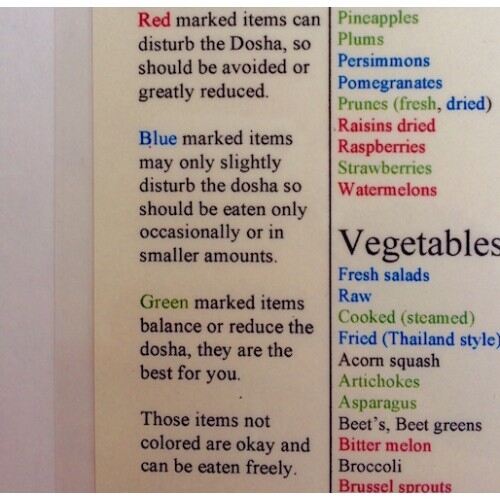
This convenient laminated chart will help bring you to a better understanding of ayurveda and get your Dosha on track. Post it on your fridge or use a washable marker to make your grocery shopping list.


1) What is Ayurveda? Ayurveda is a 5,000-year-old holistic health care system that emphasizes elemental balance (doshas), mindful lifestyle practices, and a nourishing diet, and rasayans to support health and well-being.
2) What are the three main doshas in Ayurveda? There are three main doshas Vata (air and space), Pitta (fire and water), and Kapha (earth and water). Each person has a unique combination of these doshas that can influence their physical body, their mental wellness, and even their daily cycle.
3) How can I determine my Ayurvedic dosha type? Consult with a qualified Ayurvedic practitioner in your area for a personalized assessment.
Take a free dosha quiz online or purchase our detailed assessment Dosha Diet Test (available for download or home delivery)
Feel free to call us if you have any questions!
4) Can Ayurveda help with stress and anxiety? Yes, Ayurveda offers various approaches to manage stress and anxiety, including herbal products to support the nervous system and balance dosas, meditation, yoga, and dietary adjustments tailored to your dosha type.
5) Do I need to be vegetarian to follow an Ayurvedic lifestyle? Not at all! While Ayurveda does recommend a plant-based diet, its primary focus is on balance and eating foods that best support your dosha. Meat can be included in moderation, depending on your digestion.
Vata: Fast but sensitive digestion
Pitta: Strong digestion
Kapha: Slow digestion
Eating according to your dosha and aligning meals with the best times of the day can significantly enhance your overall well-being. Ayurveda emphasizes a balanced diet suited to your individual constitution and health needs. While a plant-based diet is often recommended, moderate consumption of meat may be acceptable, depending on personal requirements.
6) How long does it take to see results with Ayurvedic treatments? The timeline varies depending on the type of treatment. Dietary changes may take time to show effects, though some benefits can be felt immediately. Certain herbal formulations can work within 45 minutes, while others may take weeks or months for noticeable results. Your individual goals, consistency, and commitment to Ayurvedic practices play a crucial role in achieving lasting benefits.
7) Are there any side effects associated with Ayurvedic treatments? When used correctly under the guidance of a qualified practitioner, Ayurvedic treatments are generally safe. However, it is crucial to source herbs and supplements from reputable suppliers to ensure purity and avoid contamination.
At Ayurveda-Herbs, we only source from trusted companies, adhere to strict GMP (Good Manufacturing Practices), and comply with FDA regulations. With over 40 years of experience, we are highly recommended by many and have heard incredible success stories from our customers!
8) How does Ayurveda differ from Western medicine? Ayurveda focuses on supporting the body's natural healing process by addressing the root cause of imbalance. In contrast, modern medicine primarily targets symptoms, often providing quick relief without necessarily treating the underlying issue.
9) Can Ayurveda be integrated with conventional medical treatments? Yes, Ayurveda can complement conventional medicine. It's important to inform all healthcare providers about the treatments and supplements you're using to ensure coordinated and safe care.
10) What are Rasayanas in Ayurveda? The term "Rasayana" comes from Sanskrit, meaning “path of essence” or “that which nourishes the body and mind.” Here at Ayurveda-herbs our rasayans are formulas consisting of standerdized extracts, powdered, herbs, essential oil, honey, brow rice syrup and ghee.
11) Why preserve honey and herbs in ghee? Preserving herbs in honey and ghee is a time-honored Ayurvedic practice that enhances both their potency and absorption. Honey acts as a natural preservative, delivering herbs deep into the tissues while also offering antibacterial and immune-boosting benefits. Ghee, a revered Ayurvedic anupana (carrier substance), nourishes the body, supports digestion, and helps transport herbal properties into the cells. Together, these mediums not only extend the shelf life of herbs but also amplify their healing effects, making them more bioavailable and easier to assimilate.
12) How much Rasayana should I take? Here at Ayurveda-herbs our suggested amount is anywhere from 1 - 3 teaspoons a day depending on your sensitivity. Up to four hours between each dose, and can take up to 45 min to feel some results. Our products are super packed with many extracts.
13) How long should i take a Rasayana for? Rasayanas can be taken when needed to support wellness. It can be taken daily for acute support, or for a longer period of time for more chronic support.
14) Where can I learn more about Ayurveda? Exploring reputable sources, attending workshops, and consulting with certified Ayurvedic practitioners can provide deeper insights into this ancient healing system.
🚚 Shipping & Returns
Shipping
- Ships within 2–3 business days
- U.S. delivery in 3–7 business days
- Choose UPS or USPS at checkout
- International shipping available (duties/taxes are customer’s responsibility)
- Tracking number provided via email once shipped
- Eco-friendly packaging (recycled boxes, biodegradable materials)
Returns
-
30-day return window from delivery
- Contact us first to start a return: ayurvedicrasayanas@gmail.com
Damages or Issues
- Inspect your order upon arrival
- Contact us immediately for damaged, defective, or incorrect items
Exchanges
- Return the item first, then place a new order
Refunds
- Issued after inspection and approval
- Refunded to original payment method
- Processing time depends on your bank/card provider
Need Help?
- 📞 541-944-7243
- ✉️ ayurvedicrasayanas@gmail.com

Quality & Compliance Commitment
At Ayurvedic Rasayanas, we are deeply committed to maintaining the highest standards of quality, safety, and consistency across all of our products. Our formulations are prepared in alignment with Good Manufacturing Practices (GMP) and applicable U.S. Food and Drug Administration (FDA) guidelines for dietary supplements and (ODA) License for Food Establishment Processing
Good Manufacturing Practices (GMP)
Our production processes follow GMP principles designed to ensure that every product is consistently produced and controlled according to quality standards. These practices include:
- Careful selection and verification of raw materials
- Documented standard operating procedures (SOPs) for all stages of production
- Thorough cleaning and sanitation protocols for equipment and facilities
- Controlled batch production and recordkeeping to ensure traceability
- Routine quality control checks throughout manufacturing
These measures help maintain the identity, purity, strength, and composition of each product.
FDA Compliance
We operate in accordance with FDA regulations for dietary supplements, including:
- Compliance with 21 CFR Part 111 (Current Good Manufacturing Practice for Dietary Supplements)
- Accurate and transparent labeling practices
- Proper ingredient identification and documentation
- Adherence to facility and hygiene standards
- Ongoing review of processes to align with current regulatory expectations
While our products are not evaluated by the FDA for the diagnosis, treatment, cure, or prevention of disease, we take regulatory responsibility seriously and strive to meet or exceed all applicable requirements.
Ingredient Integrity
We prioritize high-quality ingredients sourced from trusted suppliers. Each ingredient is:
- Evaluated for authenticity and quality
- Handled with care to preserve its traditional characteristics
- Selected in alignment with Ayurvedic principles and modern quality expectations
Batch Tracking & Transparency
Every product is prepared in controlled batches, allowing for:
- Full traceability from raw ingredient to finished product
- Consistent formulation and preparation methods
- The ability to review and verify production records at every stage
Our Commitment
With roots dating back to 1985, our company continues to uphold a tradition of integrity, craftsmanship, and respect for both ancient Ayurvedic knowledge and modern quality standards.
We remain dedicated to providing products that are carefully prepared, responsibly manufactured, and aligned with both traditional practices and current regulatory frameworks.


